Longjing tea is one of the most famous green teas in China, known for its tender leaves, fresh aroma, sweet taste and unique "chestnut flavor". Produced mainly in the West Lake District of Hangzhou City, Zhejiang Province, Longjing tea is known as the "King of Green Tea" and is listed as one of the top ten famous teas in China. The following is a detailed introduction to the various aspects of Longjing tea:
1. Properties and features
- tea plantLongjing tea is a green tea, unfermented and cold in nature, which has the effect of clearing heat and detoxifying the body.
- the source (of a product): Longjing tea is mainly produced in the West Lake area of Hangzhou, Zhejiang Province. The climate and soil conditions in this area are ideal for the growth of tea trees and produce tea of excellent quality.
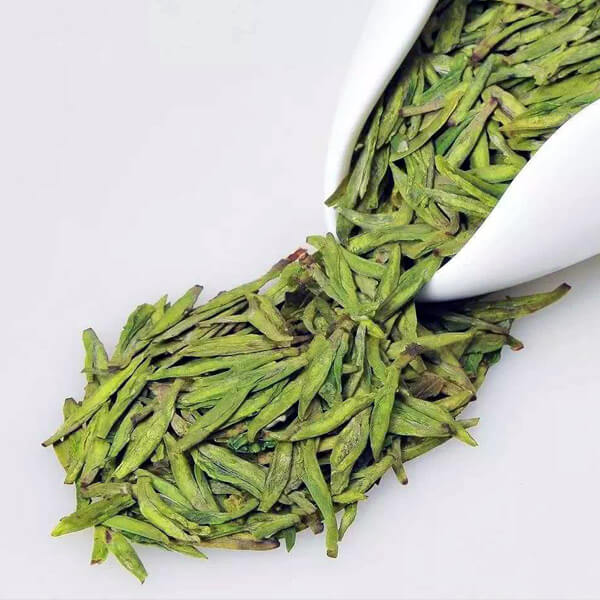
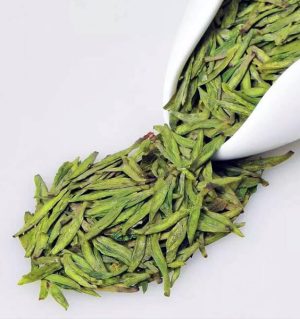
- contourLongjing tea has a flat leaf shape, tender green color, "brown rice color" or "bean green color", and uniform leaf strips.
- fragranceLongjing tea has a clear and long-lasting aroma, with a unique chestnut or bean aroma, which is refreshing and pleasant to smell.
- texture (of food): Longjing tea has a sweet and refreshing taste with a long aftertaste, and the tea broth is smooth in the mouth with a unique sense of sweetness.
- color of soup: The soup color of Longjing tea after brewing is bright and light green, clear and distinct.
2. Production process
The production process of Longjing tea is delicate and rigorous, including the following major steps:
- pluckLongjing tea is best picked with "one bud and one leaf" or "one bud and two leaves at the beginning of the development", usually in spring, the tea leaves are tender and the quality is best.
- lay out: Freshly picked tea leaves need to be spread thinly in a cool, ventilated place to allow proper water loss so that the leaves are softer.
- finalize: The tea leaves after spreading are put into a pot to kill the greening at high temperature to inhibit the enzyme activity in the tea leaves and keep the tea green. The greening process requires precise techniques from the tea growers to avoid scorching of the tea leaves.
- chafing dishLongjing tea is hand-fried to make the tea leaves into flat shape, and the kneading and pushing are done in the way of "grasping, shaking, pressing, pressing, pushing, buckling and grinding" to ensure that the tea leaves are good in color, aroma and taste.
- plastic surgery: After the fai pan, the tea leaves are shaped to give them a more pleasing appearance and enhance the aroma and flavor.
3. Classification of Longjing tea
Longjing tea is usually categorized into the following types depending on the place of origin and the time of picking:
- Xihu Longjing (tea)Longjing tea is produced in West Lake, Hangzhou, and is the finest of all Longjing teas. It is most famous for its five major production areas, namely Lion, Dragon, Cloud, Tiger and Plum, with the quality of Lion Peak being particularly good.
- Qiantang Longjing (tea): Produced in the Qiantang River Basin and surrounding areas, it has a large production volume and a slightly lower price compared to West Lake Longjing.
- Yuezhou Longjing (tea): Produced in the Shaoxing and Shengzhou areas of Zhejiang Province, it has slightly larger leaves and is slightly inferior to West Lake Longjing in flavor, but is affordable and suitable for daily consumption.
4. Value and efficacy
- health value: Longjing tea is rich in vitamin C, tea polyphenols, amino acids, catechins and other nutrients, which help to clear heat and detoxification, antioxidant, fat reduction and weight loss, and refreshing and revitalizing.
- cultural value: Due to its unique origin and long history, Longjing tea has become one of the most important representatives of Chinese tea culture. It symbolizes an elegant and refreshing mood of life and is the favorite of many literati.
- economic value: Longjing tea is regarded as high-end green tea, especially the Mingqian tea (picked before the Qingming Festival) in the West Lake Longjing, which is delicate, of excellent quality and expensive, and has a high collection and investment value.
5. How to choose Longjing tea
- look at the shape: The leaves of high-quality Longjing tea are flat in shape, emerald green or yellowish green in color, with even and neat strips, avoid choosing tea with dull leaf color and thick strips.
- scent: Longjing tea has a fresh and light aroma with a natural chestnut or bean flavor. Avoid teas that have a musty, smoky or other off-flavors.
- Look at the color of the soup: The color of the tea broth after brewing is clear and bright, light green or yellowish green. The color of the soup of poor quality tea will appear cloudy.
- savorThe taste of Longjing tea should be sweet and refreshing, fresh and mellow with a sweet aftertaste, and there should be no obvious bitterness and astringency.
- look at the underside of the leafAfter brewing, the tea leaves are soft, tender and green in color, and the "bud heart" is visible on the young leaves, which is a sign of high-quality Longjing.
6. Storage method
- Low temperature storageLongjing tea is easy to lose its aroma, it should be sealed and placed in the refrigerator at a low temperature to prevent the aroma of the tea from evaporating.
- keep away from light and moisture: The storage environment should be dry and protected from light to prevent the tea from absorbing moisture and causing deterioration.
- seal and preserve: Longjing tea is highly adsorbent, it is recommended to use aluminum foil bags, sealed tins and other packaging to prevent adsorption of odors, affecting the taste.
7. How to drink Longjing tea
- Water temperature control: Longjing tea is suitable to be brewed at a water temperature of about 80°C. Too high a water temperature will cause the tea to be bitter and astringent.
- quantity of tea: 3-5 grams of tea per infusion is appropriate, not too much, so as not to over-strength the tea soup.
- Number of brews: High quality Longjing tea can be brewed 3-4 times, each time you can slightly extend the brewing time, the tea aroma and flavor with the gradual change.
- fit: Longjing tea is suitable for pairing with light snacks, such as osmanthus cake and green bean cake, which can better complement the tea's aroma and flavor.
Longjing tea is widely loved for its unique aroma and taste. When selecting, you should pay attention to the appearance of leaves, aroma, soup color and taste, and choose Longjing tea of different origins and grades according to your needs.
 简体中文
简体中文  繁體中文
繁體中文  English