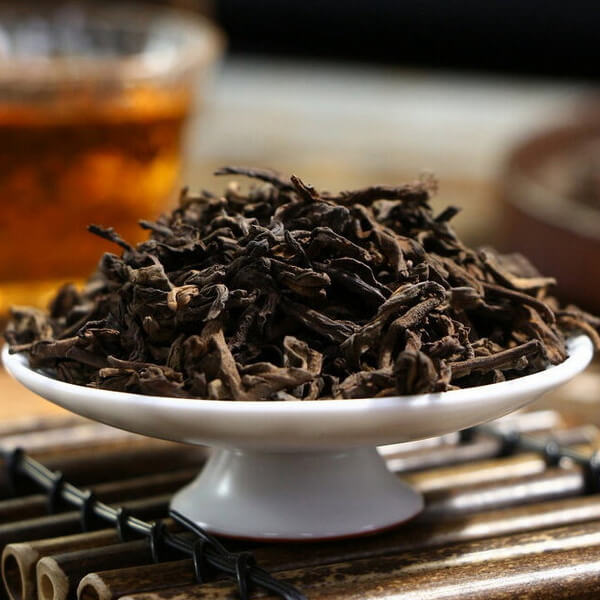
Pu'er Tea is a famous post-fermented tea in China, mainly produced in Yunnan Province, which is characterized by the fact that the more it ages, the more fragrant it becomes, and thus has the potential for collection and value-added. Pu'er tea is made from large-leaf tea leaves through a unique process and is categorized into two types of tea: raw and ripe. The following is a detailed introduction to the various aspects of Pu'er tea:
1. Properties and features
- tea plant: Pu-erh tea is made from Yunnan large-leaf tea, a tea tree with large leaves and thick leaf flesh, suitable for making Pu-erh tea.
- tea type: Pu-erh tea can be pressed into different shapes such as cakes, bricks and tuo teas, as well as in the form of loose tea.
- fermentation processPu-erh tea is divided into raw tea and ripe tea. Raw tea is naturally fermented, and its flavor and texture will gradually change as it is stored for a longer period of time; ripe tea is artificially fermented, with a short aging time and a mellow taste.
- local flavor: Pu-erh tea has a diversity of flavors. Raw teas usually have a clear aroma with a strong vegetal flavor, while ripe teas have a distinctive aged aroma and a soft, rich taste.
2. Production process
- pluck: Fresh young leaves of large-leaf tea trees from specific production areas in Yunnan are used, and different grades of tea are picked according to the seasons.
- initial: Fresh tea leaves are killed, twisted and dried to make gross tea.
- mellow::
- raw tea: After natural aging and fermentation, without artificial treatment of Ottoman fermentation, the polyphenols in the tea leaves are gradually transformed over time, and the flavor becomes more and more mellow.
- mature tea: The gross tea is subjected to Ottoman fermentation, where moisture is regulated and microorganisms are involved in the fermentation, resulting in rapid oxidation of the tea leaves, generating a reddish-brown leafy bottom with a strong taste.
- Drying and molding: Tea leaves are fermented and then pressed and shaped (cakes, bricks, tuos, etc.) and then dried for preservation.
3. Values and Collections
- health value: Pu-erh tea is rich in tea polyphenols and a variety of beneficial microorganisms, with antioxidant, digestive and lipid-lowering health effects. Ripe tea is especially helpful in nourishing the stomach.
- collector's itemPu-erh tea has the characteristic of "the more it ages, the more fragrant it is", and as it ages, its flavor becomes more unique, and it has a certain value-added potential in the collection market.
- Value-added potential: Many old Pu'er teas have increased in quality and value over time, and some of the historical teas are highly priced and are the first choice for tea lovers to collect.
4. How to Select Puerh Tea
- Tea sources: Choose famous production areas, such as Xishuangbanna, Pu'er City, Lincang and other areas in Yunnan Province to produce more authentic Pu'er tea.
- Look at the pressed shape: Pu-erh tea is available in a variety of shapes such as cakes, tuo teas and bricks, which can be chosen according to the needs and storage space.
- scent: Good Puerh raw tea has a fresh or floral aroma, while ripe tea has a mellow, aged flavor. Avoid teas that have a musty or pungent odor.
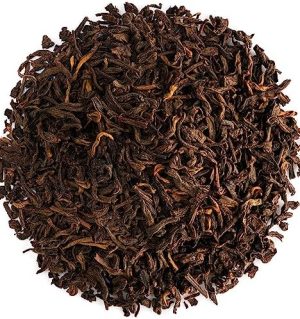
- Look at the color of the tea leaves: The leaves of Puerh raw tea appear dark green, while those of ripe tea appear reddish brown; avoid teas that are too dull in color or have black spots.
- Observation of soup color: The tea broth after brewing should be bright and colorful, and should not be too cloudy. The color of raw tea soup is yellowish green, and the color of ripe tea soup is reddish brown.
- Tea Tasting: When tasting the tea broth, it should be smooth without bitterness and astringency, with a sweet aftertaste. A good Puerh tea has a strong and rich flavor, and a feeling of freshness after drinking.
5. Storage method
- Dry storage: Pu-erh tea is sensitive to air humidity and should be kept in a relatively dry environment to avoid moisture.
- well ventilated: The storage environment should avoid airtightness and can be placed in bamboo baskets or cardboard boxes to ensure ventilation.
- Store away from light: Pu-erh tea should be kept out of direct sunlight and stored in a location protected from light.
- Avoiding odors: Pu-erh tea is highly adsorbent and should be avoided together with other items that have an odor.
The production process, flavor characteristics, health value and collection potential of Puerh tea make it a valuable tea. When choosing, pay attention to the source and quality, and select raw or ripe tea according to your personal taste.
 简体中文
简体中文  繁體中文
繁體中文  English